
Beyond the Injury: Helping You Get Back to the Activities You Love
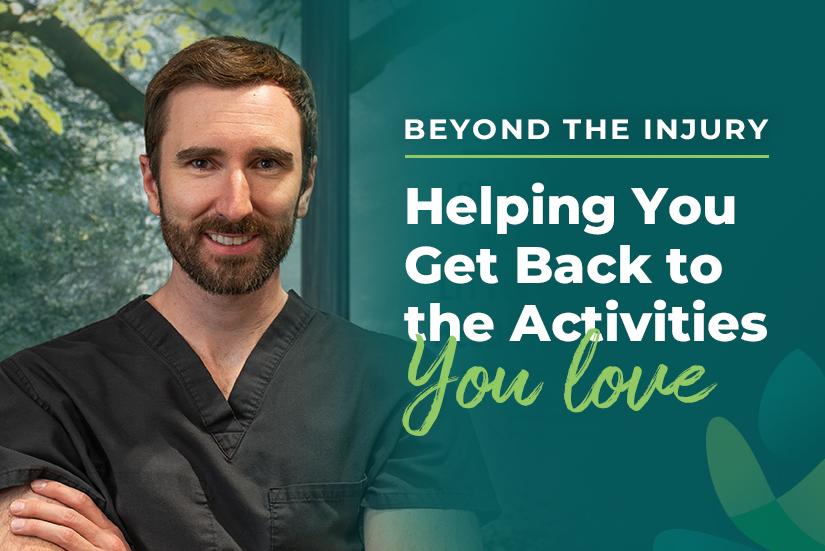
Whether you are competing in a sport, playing a weekend round of golf, gardening in the backyard, or simply moving through your daily routine, healthy knees and shoulders help keep you active. When pain or injury gets in the way, fellowship-trained orthopedic surgeon Dr. Bryan Perkins helps patients find a path back to the activities that matter most.
Dr. Perkins specializes in Sports Medicine and complex conditions of the knee and shoulder. After completing his orthopedic surgery residency, he pursued additional fellowship training focused on sports-related injuries and advanced arthroscopic techniques. Today, he treats everyone from competitive athletes to recreationally active adults at St. Cloud Surgical Center.
“I felt that I had a very unique opportunity to really help not only athletes, but also everyday people get back to the activities they wanted to do,” Dr. Perkins explains. “I saw very good outcomes getting people back to what they wanted to do, and that was always very important to me.”
Sports Medicine Is Not Only for Athletes
The term “sports medicine” may bring to mind high school, college, or professional athletes. However, sports medicine specialists treat anyone whose movement, function, or quality of life has been affected by an injury or orthopedic condition.
Dr. Perkins works with patients across a wide range of ages and activity levels. Some are hoping to return to competitive sports. Others want to golf, water ski, exercise, play pickleball, work without pain, or move comfortably around their homes.
The common goal is helping each person return to the activities that are important to them.
That patient-centered philosophy shapes every part of Dr. Perkins’ approach, from the initial evaluation to treatment, surgery, and recovery.
Common Knee Injuries
The knee is a complex joint that absorbs significant force during walking, running, jumping, twisting, and many other movements. Because of that, it is especially vulnerable to injury.
One of the most common knee conditions Dr. Perkins treats is a meniscus tear. The knee contains two menisci, which are pieces of cartilage that help cushion and stabilize the joint. Symptoms of a meniscus tear may include pain, swelling, stiffness, catching, locking, or difficulty fully moving the knee.
Dr. Perkins also frequently treats ACL tears, particularly among athletes. The anterior cruciate ligament, or ACL, helps stabilize the knee during pivoting, cutting, and sudden changes in direction. An ACL tear may occur during sports, but it can also result from a fall, awkward landing, or other sudden movement.
Common Shoulder Injuries
In the shoulder, rotator cuff injuries are among the most common conditions Dr. Perkins sees.
The rotator cuff is a group of muscles and tendons that helps stabilize the shoulder and allows the arm to lift and rotate. Injuries may occur suddenly due to a fall, accident, or forceful movement.
However, not every rotator cuff injury begins with an obvious event.
“It can happen either from an acute trauma, but it can also just happen from some wear and tear as we get older,” Dr. Perkins explains.
Patients with a rotator cuff injury may experience pain when lifting the arm, reaching overhead, sleeping on the affected side, or completing routine tasks. Weakness and reduced range of motion may also develop.
When Should You See an Orthopedic Specialist?
Not every ache or pain requires immediate specialized care. Minor injuries may improve with rest, ice, activity modification, and over-the-counter medication. Dr. Perkins recommends seeking an evaluation when symptoms are significant or do not begin improving.
“If you feel a pop and there’s really significant pain associated with that, and it’s lasting more than a couple days to a week, I think it’s worth coming in and getting checked out,” he says.
Other signs that may warrant an orthopedic evaluation include:
- Persistent or worsening pain
- Significant swelling or bruising
- A feeling that the knee or shoulder is unstable
- Catching, locking, or popping within the joint
- Difficulty bearing weight on the leg
- Weakness in the shoulder or arm
- Limited range of motion
- Pain that interferes with sleep, work, sports, or daily activities
An evaluation can help determine the cause of the symptoms and whether additional imaging, therapy, or treatment is needed.
Surgery Is Not Always the First Step
Seeing an orthopedic surgeon does not automatically mean that surgery will be recommended.
Dr. Perkins explores a variety of nonsurgical treatment options for both knee and shoulder conditions. Physical therapy is often one of the first treatments considered.
“Sometimes people are a little skeptical of that, but oftentimes physical therapy is really the first-line treatment for both conditions of the knee and the shoulder,” he says. “It can provide some very excellent relief and really prevent the need for surgery.”
Depending on the diagnosis, nonsurgical care may also include:
- Rest and activity modification
- Ice and anti-inflammatory medication
- Bracing
- A structured home exercise program
- Physical therapy
- Injections into the knee or shoulder
Treatment recommendations depend on the injury, the severity of symptoms, the patient’s overall health, and the activities they hope to return to.
When conservative treatments do not provide enough relief, or when an injury requires surgical repair, Dr. Perkins develops a procedure and recovery plan tailored to the patient. The goal is not simply to complete the surgery. It is to protect the repair, rebuild movement and strength, and help the patient return safely to activity.
The Advantages of Arthroscopic Surgery
One of the most important advancements in orthopedic care is the ability to perform many knee and shoulder procedures arthroscopically.
Arthroscopic surgery uses a small camera and specialized instruments inserted through small incisions. This allows the surgeon to see inside the joint and treat the injury without the larger incision that may be required during open surgery.
“We used to do all of the surgeries open, where you had a larger incision, more dissection, and more damage to the muscle,” Dr. Perkins explains. “Now, with more arthroscopic and minimally invasive techniques, the soft tissue dissection and damage to the muscle and skin is much more minimal. That heals up a lot quicker.”
Potential benefits of arthroscopic procedures may include smaller incisions, less disruption to surrounding tissue, and a more efficient recovery for appropriate patients.
Orthopedic Care at St. Cloud Surgical Center
Dr. Perkins performs outpatient orthopedic and sports medicine procedures at St. Cloud Surgical Center, where patients receive care from a coordinated surgical team.
“I can’t speak highly enough about the staff here,” Dr. Perkins says. “All the way from our reception to our nurses, our surgical staff, and our postoperative nurses, the whole team works together to make the experience really as enjoyable as we can make it.”
That teamwork supports patients throughout the full surgical experience, from check-in and preparation to the procedure, recovery, and discharge. The outpatient setting also allows eligible patients to return home the same day and begin recovering in a familiar environment.
If knee or shoulder pain is keeping you from the activities you enjoy, talk with your healthcare provider about your treatment options and whether outpatient orthopedic care at St. Cloud Surgical Center may be right for you.